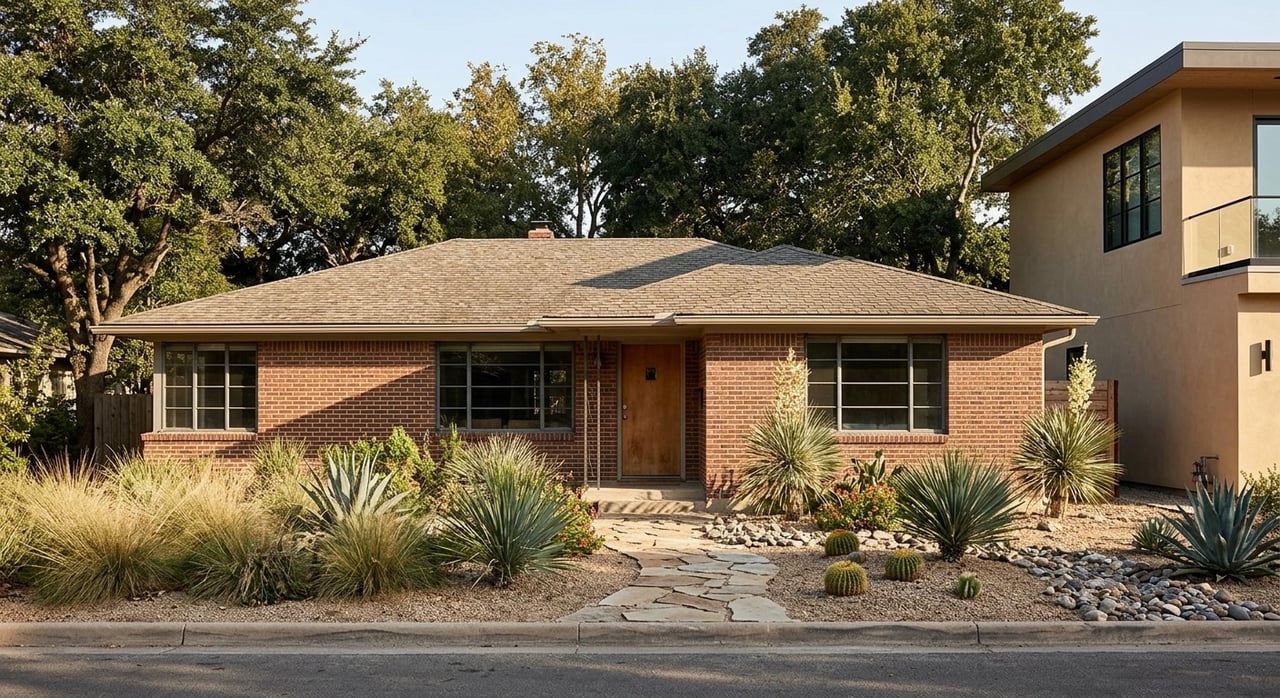
Trying to choose between Odessa and Midland? For many West Texas buyers, the decision is less about picking a “better” city and more about matching your budget, housing style, and daily routine to the right market. If you are weighing newer homes, price points, commute patterns, or long-term value, a side-by-side look can save you time and help you focus your search. Let’s break it down.
Odessa vs. Midland at a glance
Odessa and Midland are both largely car-oriented housing markets with a strong focus on detached homes. In both cities, single-family living is the dominant housing style, and most residents rely on personal vehicles for daily travel.
The biggest difference shows up in home values and housing age. Midland generally trends newer and more expensive, while Odessa tends to offer a lower median entry point and a larger share of established housing stock.
Home values and budget range
If budget is a major factor, this is usually where the comparison starts. Current ACS-based estimates show a median owner-occupied home value of $324,300 in Midland and $243,600 in Odessa.
That is a difference of $80,700, or about 33%. In practical terms, Midland often asks for more financial headroom, especially if you want newer construction or more updated finishes.
What that means for buyers
Midland has a larger share of homes in the $300,000 to $500,000 range. Odessa is more concentrated in the $200,000 to $300,000 range.
If you are trying to keep your purchase price lower while still buying a detached home, Odessa may offer more options that fit. If you are comfortable shopping at a higher price point for newer inventory, Midland may align better with your goals.
Rent prices are closer
The gap between the two cities is smaller on the rental side. Median gross rent is $1,407 in Midland and $1,322 in Odessa.
That means renters may see less separation between the markets than buyers do. If you are relocating and planning to rent first, your housing style and location preferences may matter more than the city name alone.
Housing styles in both cities
Both Odessa and Midland are mostly detached-home markets, not condo-heavy markets. That matters if you are moving to West Texas and expecting a suburban, single-family housing landscape.
ACS 2023 5-year estimates show Midland with 65.2% single-family detached homes and Odessa with 63.8%. Both cities clearly center around standalone homes, with smaller shares of attached product.
Midland housing mix
Midland shows 65.2% single-family detached and 4.0% single-family attached housing. It also has a larger share of newer homes, which gives buyers more opportunities to find recent layouts, finishes, and neighborhood development patterns.
City housing analysis also points to ongoing single-family growth, including development such as Mockingbird Ridge. Single-family permitting rose by 100 homes, or 15%, in the referenced period, which supports the idea that Midland continues to add newer inventory.
Odessa housing mix
Odessa remains a strong detached-home market as well, with 63.8% single-family detached and 2.5% single-family attached housing. It also has slightly more mobile-home inventory than Midland.
For buyers, that usually translates to a broader mix of older homes, established areas, and properties that may offer value through updates over time. If you are open to renovation or phased improvements, Odessa may create more room for that strategy.
Age of housing stock
The age of the home matters just as much as the city. It can affect layout, maintenance needs, finishes, systems, and how much updating you may want to budget for after closing.
Midland has more recent construction
In Midland, 21.9% of homes were built in 2010 or later. Only 3.6% were built before 1970.
That points to a market with more recent suburban growth. If you want a home that feels newer from day one, Midland is more likely to give you options without as much renovation planning.
Odessa has more established inventory
In Odessa, 15.8% of homes were built in 2010 or later. The City of Odessa’s 2025-2029 Consolidated Plan reports that 65% of owner-occupied homes and 52% of renter-occupied homes were built before 1980.
It also notes that 59% of owner units were built during the 1950 to 1979 period. That suggests a much deeper pool of legacy housing, which can be a plus if you value established neighborhoods or want to improve a property over time.
Commute patterns and daily life
Both cities are built around driving, so commute convenience often depends on the corridor you choose. In many cases, where you live within the city matters just as much as whether the address says Odessa or Midland.
Median travel time to work is 20.1 minutes in Midland and 22.4 minutes in Odessa. Public transit is a negligible commute mode in both cities, and car ownership is the norm.
Midland commute considerations
Midland’s official city materials describe a strong energy-led economy, with major employers and regional operations tied to companies such as Chevron, Diamondback Energy, Pioneer Natural Resources, Midland Health, ConocoPhillips, ExxonMobil, EOG Resources, Oxy, and AST SpaceMobile.
The city also highlights downtown revitalization and airport terminal expansion, reinforcing Midland’s role as a business and mobility hub. If your work or travel patterns tie closely to downtown, Loop 250, or the airport corridor, your home search may naturally lean toward those areas.
Odessa commute considerations
Odessa’s official materials emphasize infrastructure and access. The city highlights the intersection of I-20 and U.S. 385, rail service that supports 24/7 shipping and receiving, and proximity to Midland International Air & Space Port between the two cities.
Odessa also points to downtown activity, arts amenities, and healthcare-related activity. If your routine depends on highway access, freight-related routes, central Odessa, or major transportation corridors like Loop 338, location within Odessa may be especially important.
Which market fits your goals?
The better choice depends on what you are trying to solve for. Price, housing age, and daily driving patterns usually tell the story faster than broad labels do.
Midland may fit you if
- You want a larger share of newer housing stock
- You are comfortable with a higher median value range
- You prefer recent neighborhood development patterns
- You want to focus on areas tied to downtown, Loop 250, or airport access
Odessa may fit you if
- You want a lower median entry point
- You are open to older homes with update potential
- You prefer more established housing inventory
- You want strong access to highway-heavy travel corridors
Focus on the property, not just the city
One of the most useful ways to think about this comparison is to avoid treating Midland and Odessa as simple opposites. Both markets include a mix of home types, price points, and location advantages.
The real question is how the property fits your daily life and long-term plan. A well-located Odessa home may make more sense for your budget and commute than a Midland address, while a newer Midland property may better match your priorities for condition and finish level.
When you compare housing options in West Texas, the details matter. Price point, age of stock, road access, and future upkeep all shape value in different ways.
If you want a clear, practical strategy for buying in Odessa or Midland, Taylor Dickerson can help you compare options with a sharp eye on both lifestyle fit and long-term value.
FAQs
What is the main housing price difference between Odessa and Midland?
- Midland’s median owner-occupied home value is $324,300, while Odessa’s is $243,600, so Midland is about 33% higher based on current ACS-based estimates.
What kind of homes are most common in Odessa and Midland?
- Both cities are dominated by single-family detached homes, with Midland at 65.2% detached and Odessa at 63.8% detached according to ACS 2023 5-year estimates.
Which city has newer homes, Odessa or Midland?
- Midland has a larger share of newer housing, with 21.9% of homes built in 2010 or later compared with 15.8% in Odessa.
Are commute times different in Midland and Odessa?
- Yes, but the gap is modest: Midland’s median travel time to work is 20.1 minutes and Odessa’s is 22.4 minutes.
Is Odessa a good option for buyers looking for older homes?
- Odessa has a larger share of established housing stock, including many owner-occupied homes built before 1980, which may appeal to buyers who are open to updates or renovation over time.
Does location within Odessa or Midland matter more than the city itself?
- In many cases, yes. Corridor access, commute routes, and proximity to downtown, highways, or airport-connected areas can matter just as much as choosing Odessa versus Midland.