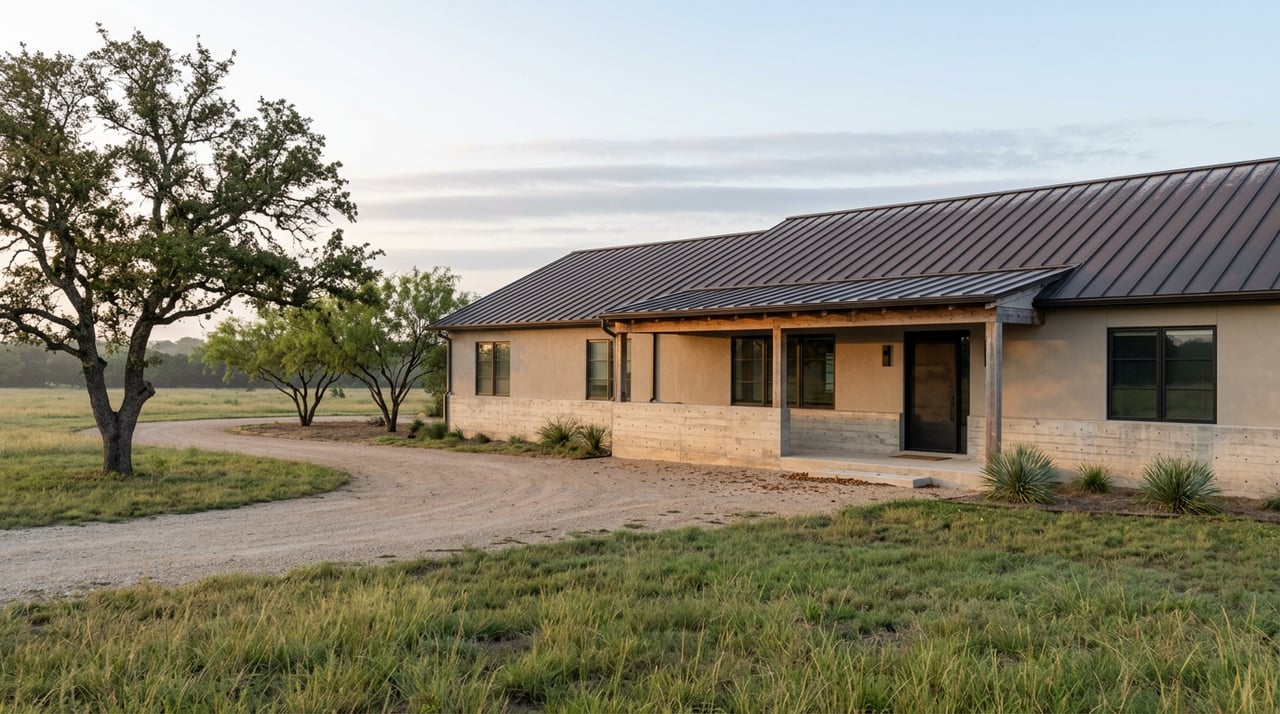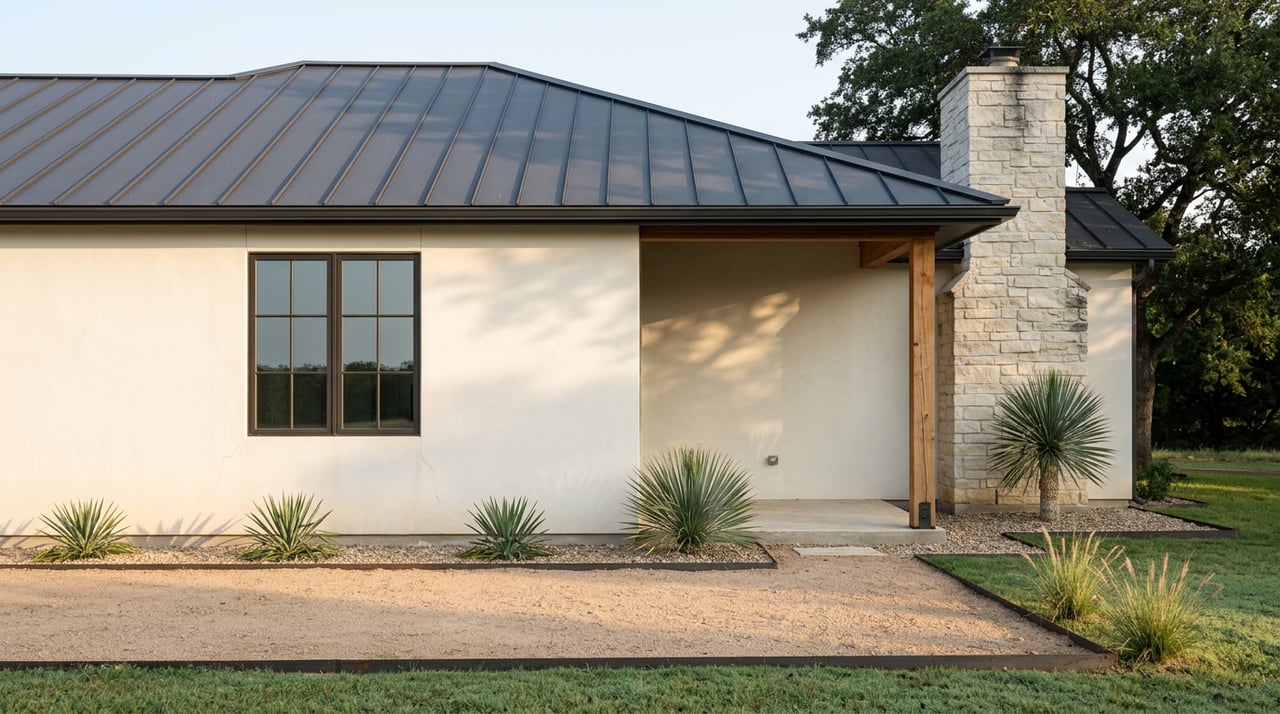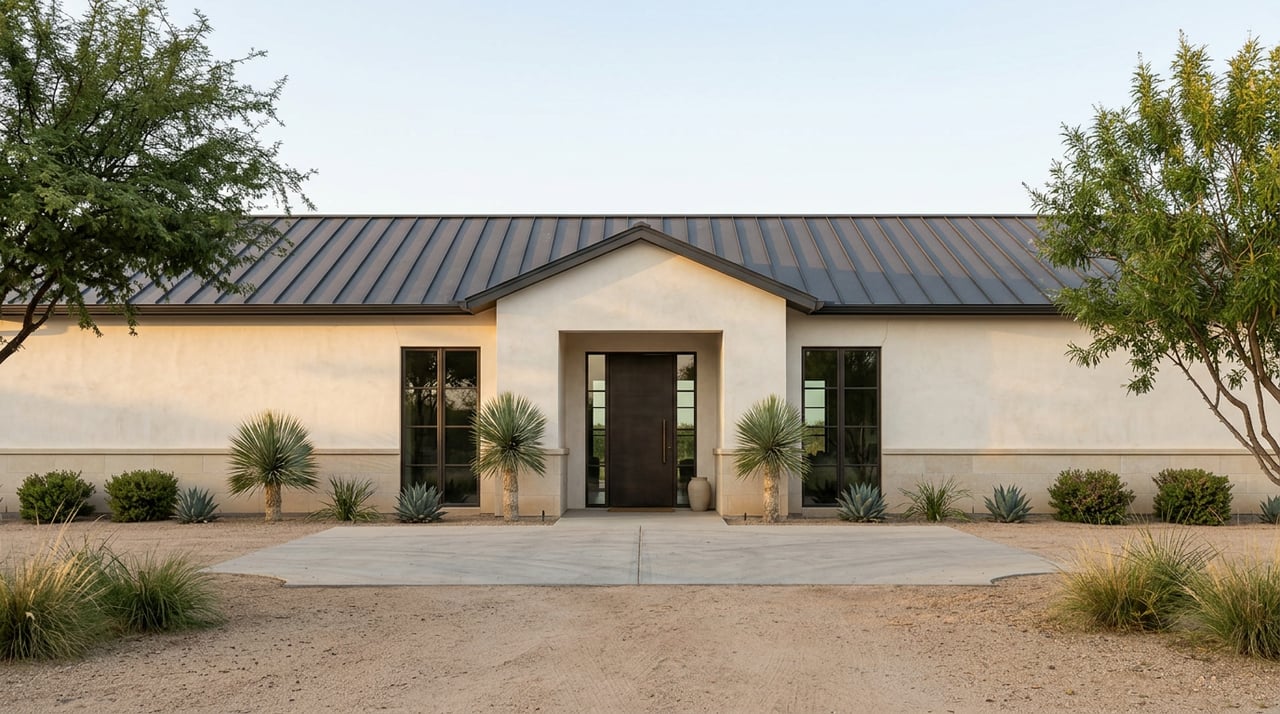
Two five-acre tracts on the same Gardendale road can list within twenty thousand dollars of each other and still be a year apart in usable timeline. The listing photos will not tell you which is which. The MLS remarks might not either. What separates them is a stack of decisions that were made long before the sign went in the yard: which county the parcel sits inside, whether the water corporation can put a meter on it, and how deep the caliche runs under the proposed drainfield.
Buyers coming from an in-town Midland or Odessa lot expect a price-per-acre calculation. Gardendale rewards a different question. What has to happen between contract and certificate of occupancy, and who controls the calendar?
The County Line Is A Line Item
Gardendale is unincorporated and sits where Ector, Midland, and Andrews counties meet. Listings will tell you which side of the line a tract falls on because it changes almost everything downstream. A Pura Vida Estates lot advertised for new-construction build in Gardendale, for example, comes with underground utilities but requires the buyer to install both a water well and septic system. A tract two miles east in Midland County might have a Greater Gardendale WSC tap already stubbed to the property line.
Three practical consequences follow from which county your survey sits in:
- Permitting authority. In Ector County, the Ector County Health Department is the on-site sewage facility permitting authority. Midland and Andrews route through their own offices, with fallback to the TCEQ regional program.
- Taxing entity. County appraisal, county road, and school district lines do not run parallel. Greenwood ISD reaches into portions of Midland County; Ector County ISD and Andrews ISD cover other pockets.
- Development permits. Ector County issues a Development Structure Permit that requires a site plan showing the location of the structure, septic, and water well within the property lines, with dimensions from each to each. That drawing is not a formality. It locks in setbacks that can shrink your build envelope more than a covenant would.
None of this shows up in a price-per-acre comparison. All of it shows up in the closing calendar.
The Meter Question
The Greater Gardendale Water Supply Corporation operates a rural water system covering roughly twenty square miles in Ector and Midland counties from its office at 6600 E. Goldenrod Avenue. If a tract already has an active residential meter, transfer is procedural. If it does not, a residential new-service applicant fills out the New Meter Packet in person during posted office hours. Commercial accounts are a different conversation entirely; the corporation's own guidance is that commercial accounts are currently unavailable and applicants may need to join a waiting list.
That waiting list matters more than most buyers realize. Anyone underwriting a Gardendale tract for a small yard, a workshop with plumbed utilities, or an equine operation with a barn tap should confirm the service classification in writing before waiving a due-diligence contingency. A residential meter does not automatically upgrade.
Behind the meter question sits a longer arc. Ector County Commissioners approved an agreement with engineering firm Burgess and Niple Inc. and GGWSC to construct a pipeline as a secondary water source, backed by roughly $4.5 million in American Rescue Plan Act funds routed through the county. GGWSC board president James Wise described the driver plainly, saying "the water table is dropping" and calling the secondary source the culmination of a decades-long board priority, per NewsWest 9.
For a buyer, two things follow. A tract on the GGWSC system inherits the security of the coming secondary source. A tract that will rely on a new private well inherits the aquifer trend Wise was describing. Neither is a dealbreaker. Both are underwritable, and each belongs on the offer worksheet.
Caliche Sets The Septic Budget
The septic conversation in Gardendale is not really about tanks. It is about soil. The Ector County Health Department's own guidance describes the profile in plain terms: a thin layer of sandy loam at the surface, typically no more than about three feet, over a calcified layer commonly called caliche that can extend as deep as thirty-five feet. When a licensed site evaluator opens a hole and hits caliche shallow, the drainfield design changes. Soil substitution, aerobic treatment, or an alternative disposal method may be required in place of a conventional gravity system.
That is where the price gap between two similar tracts appears. A conventional septic on cooperative soil is one number. An aerobic system with pretreatment, spray heads, and a mandatory maintenance contract is another. Texas requires three inspections per year by a licensed maintenance provider for the first two years on every aerobic system, which is stricter than most states and shows up as a recurring line in the household budget, not a one-time install cost.
A workable order of operations before the option period ends:
- Order a site evaluation from a licensed site evaluator or professional engineer. The evaluator surveys the lot, tests soil in the proposed disposal area, and identifies whether a conventional or aerobic design is feasible.
- Confirm setbacks. On paper the OSSF must clear the property line and any well by state-defined distances. In practice, on a five-acre tract with a shop and a barn, those setbacks decide where the house can go.
- Route the planning materials through the Ector County Health Department if the tract sits in Ector County. Authorization to Construct is typically issued within about five business days once the design is acceptable.
- Budget the maintenance contract, not just the install, if aerobic is required.
None of these steps is exotic. Each of them has been the reason a Gardendale closing slipped by a month.
The Ten-Acre Exemption Has A Trapdoor
State rule 30 TAC Chapter 285 exempts single-family dwellings on properties of ten acres or larger from OSSF permitting, provided no effluent crosses a property line. That exemption is real, and on paper it saves a step. On a resale, it can also cost the seller a step.
The exemption removes the permit requirement, not the design standards. A future sale can trigger retroactive permitting, an inspection, or an upgrade demand from a lender or a buyer's inspector who wants to see paperwork that never existed. Sellers who used the exemption should assume that a bank-financed buyer will ask for a licensed installer's statement, a septic inspection, and a maintenance history. If any of those come up short, the fix lands in the seller's lap during the option period, not before listing.
Buyers, meanwhile, should read the exemption in reverse. A large tract with no septic permit on file is not necessarily a compliant tract. It is a tract to diligence.
What This Changes About Price-Per-Acre
Regional land data puts Ector County's median at roughly $38,500 per acre and Greenwood-area listings averaging closer to $393,000 per acre as of mid-2026, per LandSearch aggregates. Those are wide bands for a reason. Two identical-looking Gardendale tracts can price honestly at different levels because one carries a live GGWSC residential meter, a permitted conventional septic, and a build pad already cut, while the other carries a private-well allowance, an aerobic design requirement, and a Development Structure Permit still to file.
The seller who invested in the site work captures that value at closing. The buyer who accepts the raw tract accepts the calendar and the check register. Both trades can be good trades. Confusing one for the other is the mistake.
Before You Sign
A short due-diligence checklist for a Gardendale acreage contract:
- Confirm the county on the survey, not the mailing address.
- Pull the GGWSC service status in writing. Meter installed, meter available, or waitlisted.
- If a private well is required, ask for the TDLR driller's log and a recent yield test.
- Commission a licensed site evaluation before the option period ends. The soil result is the septic budget.
- Ask whether any existing OSSF was permitted or claimed the ten-acre exemption, and request the permit and maintenance file if one exists.
- On tracts with pipeline easements or existing mineral activity, ask for the easement plat before you site the house.
FAQ
Is a Gardendale well safe to drink from? Water quality is a well-by-well question, not a Gardendale question. A private well should be tested at the point of sale and periodically thereafter, and a working pressure tank and pump are as important to underwrite as the casing.
Can I put a shop with a bathroom on a residential GGWSC meter? Not automatically. The service classification and meter sizing determine what fixtures the corporation will allow. Confirm in writing before you pour the slab.
How long does an Ector County OSSF permit take? Once the site evaluation and planning materials are complete and acceptable, the county typically issues Authorization to Construct within about five business days. The clock that matters is the one that runs before the design is complete, not after.
Does the ten-acre exemption transfer to the next owner? The exemption travels with the property while it still qualifies, but a sale can trigger the permitting question retroactively, particularly if a lender or inspector requests documentation. Treat it as a diligence item, not a permanent waiver.
Buying acreage in Gardendale is a straightforward transaction when the site work is honest and a slow one when it is not. If you are weighing a tract and want a second read on the meter status, the septic design, or the county-line implications before you write, Taylor Dickerson works these deals from the survey up. Let's Connect.